
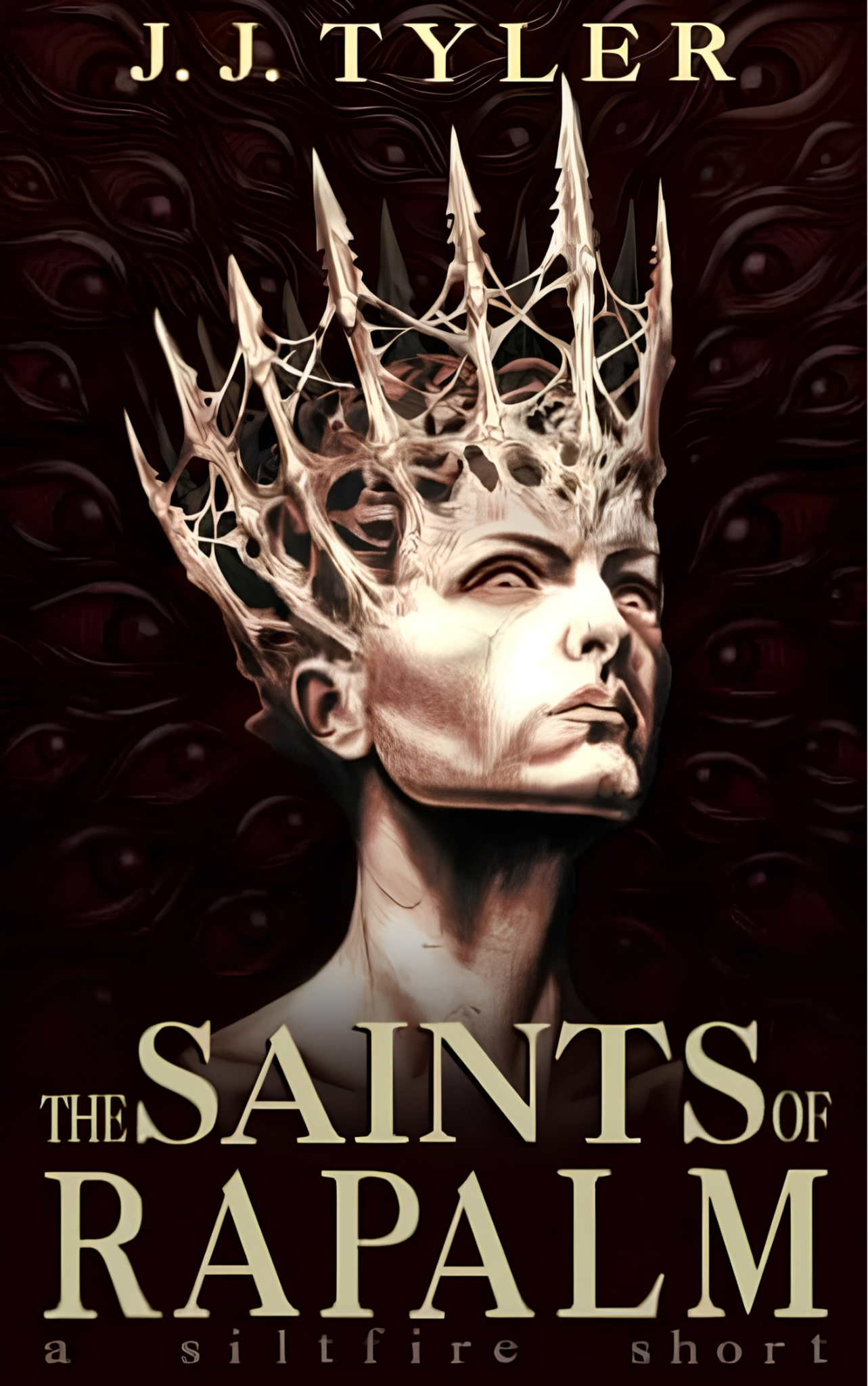
The Saints of Rapalm by J.J. Tyler
I
received a free ARC from the author in exchange for an honest review.
The narrator of The
Saints of Rapalm is a Black literature professor who
believes he is a genius the world refuses to see. He teaches young writers who
go on to win awards, while the major institutions keep him out of sight until
his tenure review comes around, then act surprised that no esteemed publisher
has picked him up. Someone, named Janice, tells him what he needs is "a
spectacle." That hunger pulls him toward a mysterious island called
Rapalm.
Crown him with bone; make pain his throne.
The narrator/main character
Tyler's best achievement is voice. The narrator is arrogant, bitter, and often cruel. He calls writing for tenure "beneath" him and says he doesn't accept criticism "from people less enlightened" than himself. The book never asks you to like him. It asks you to watch him. He judges others harshly while missing what the reader can plainly see about him, and that blind spot is the engine of the book. The ending fits him completely.
Race, ambition, and approval
The narrator's Blackness is more than a backdrop. He believes white institutions want his labor and not his name and the author shows how little the narrator's education buy him in the South. That tension, craving recognition from people who deny it while despising everyone else for lacking his enlightenment, is the most interesting idea in the book. It makes his arrogance read as a wound, not just a flaw.
The dialogue and the father
The dialogue is the other standout. It sounds like people actually talking, and it carries the emotional weight. A line like "Then you came looking for a story. Or were you following an obsession?" gave me chills! I LOVED IT.
The father-son scenes hit me hardest. A father says he's only trying to connect, and the narrator wishes he had tried harder, sooner. I felt for both of them. I know parents who show up late and then resent their children for not opening the door. Another moment, where the narrator realizes his father would have listened to anything he wrote, reminded me of my own mom, who praised everything I showed her. These scenes give the story a tenderness that balances the narrator's coldness.
Where it struggles: clarity
My main thing this struggles with is that Tyler often leaves readers to fill gaps, and some are too wide. For the first five chapters I kept rereading. Examples:
- Point of view. In one scene I thought the narration had jumped from third person to first. Later dialogue showed I had misread it, but the text hadn't set the scene up clearly enough to prevent that.
- Unclear references. In one passage the narrator says "they'd have had no use for me" without telling us who "they" are. In another, he says he "took it for a day after his ship had left," and I couldn't tell what "it" was.
- Confusing explanations. One character describes Rapalm in language I read three times and still couldn't picture. I couldn't tell which thing was doing what.
- Late context. The 1955 setting isn't pinned down until Chapter 3, and the Green Book is mentioned with no introduction.
- Unexplained choices. The narrator seriously considers abandoning his trip but we're never told why. He says something about the people he meets disgusts him because of what it reminds him of in himself, then never says what. He also draws a conclusion about a stranger's reaction without showing how he got there.
My problem with Janice
Janice
is the biggest gap. She becomes important after Chapter 6, and a woman on
Rapalm apparently uses her voice to reach the narrator in Chapter 1. But the
book never establishes who she is. Is she his mother, sister, or ex? Chapter 3
reveals she died years earlier, which makes her role harder to follow, not
easier.
The back half
Around Chapter 6 the book finds its footing. The sentences sharpen, the gaps narrow, and it reads as if Tyler had been waiting to get here. The dialogue stays strong, and the story's momentum finally matches its ideas. Some lines are poetic and unsettling in a way I didn't expect from the first half.
J.J. Tyler is really good with dialogue!
Who it's for
Readers who like unreliable, unlikeable narrators, dialogue-driven stories, and horror-leaning literary mysteries, and who will tolerate ambiguity early on. If you need every thread tied off, this may frustrate you.
Bottom Line
A short, entertaining read with a memorable narrator, sharp dialogue, and a strong back half.


Post a comment